Export of Defense Technologies – Key Compliance Rules for International Cooperation in MilTech
Today’s realities demand swift decision-making, as the MilTech sector is characterized by rapid product development and evolving conditions of use. Companies must understand and comply with the rules and procedures governing the export control of defense technologies well in advance. Our partner Nadiia Yermiichuk, together with the Brave Inventors platform, analyzed the legal procedures Ukrainian defense tech companies need to prepare for when entering international markets.
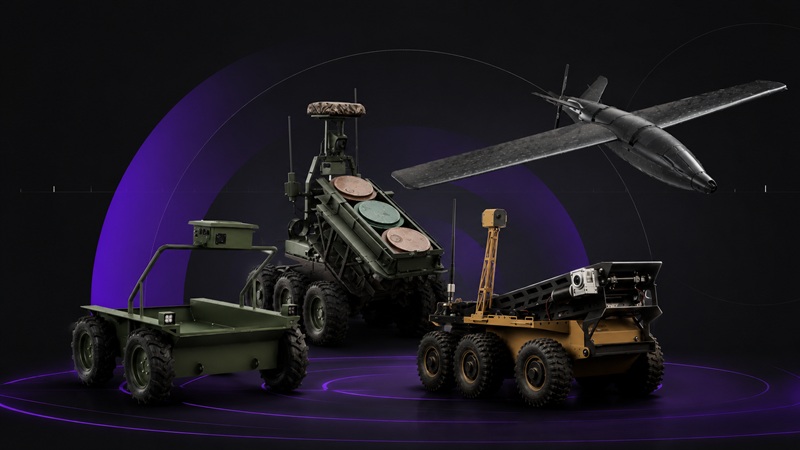
Defense technologies require a new approach to exports
The technology ecosystem is accustomed to rapid development and the free flow of civilian products. Defense tech moves at the same pace and is just as innovative, but the industry faces specific regulations governing the transfer of technology and information. One of the most unusual aspects of the civilian technology sector is export and import controls on the circulation of defense goods.
In the context of compliance, export controls play a crucial role because they are a mandatory stage in the product development cycle that involves multiple jurisdictions or foreign entities (companies, teams, investors, etc.).
The export control system was created under different circumstances and does not account for the current pace of innovation. Previously, there was simply no need for such speed. Today, however, circumstances have changed.
How the Export of Defense Technologies Works
As a general rule, there are two lists of defense goods. Ukraine, as a participant in the international export control system, the Wassenaar Arrangement, has these same two lists of defense goods. In different countries, the names of the categories may vary slightly, or there may be more detailed lists, such as strategic goods in Estonia. Therefore, one of the very first tasks is to classify your product in the country of origin.
- military goods
- dual-use goods
Military goods include products designed exclusively for military use, namely: weapons, military equipment, or specialized components for them.
Dual-use goods are products that can be used in both civilian and military applications. The most familiar examples to us are various UAVs, their ecosystems, and their components. State export controls apply not only to the finished product but also to its components, parts, maintenance services, certain information about the product and its operation, documentation, training, briefings, and even the transfer of rights (such as intellectual property licensing, the sale of product rights, etc.). In Ukraine, the main regulatory authority is the State Export Control Service (SECS).
In the vast majority of countries, including Ukraine, violations of export legislation constitute a criminal offense punishable, among other things, by imprisonment.
Therefore, compliance with export procedures is critical when interacting with foreign entities, entering new markets, and, in particular, attracting investment.
Compliance Standards for Defense Products
At every stage of a product’s creation, development, scaling, and implementation, various compliance requirements arise.
Investor Track. Different investors (angel investors, family offices, institutional funds) and funding rounds have varying requirements regarding intellectual property registration and R&D financing. This often means that, as a result, the company or product must have a presence abroad (either officially or de facto).
Accordingly, for defense-sector goods, including dual-use and military-purpose goods, the issue of export compliance arises al. After all, consolidating IP abroad, conducting R&D, or even disclosing certain product information to a foreign investor – without an actual transfer – will be considered an export.
In such cases, responsibility for compliance with export regulations and procedures lies primarily with the product owner, not the investor. However, under certain conditions, investors may face import restrictions on defense technologies, particularly during equity financing rounds.
It is important to note that compliance with export restrictions involves not only the actual act of exporting but also preventing uncontrolled exports, which is achieved through the establishment of processes and the exchange of information.
The same export control rules apply to the sale of end products, services, and technology transfers. At the same time, compliance levels may vary depending on the counterparties. For example, players in the traditional defense sector have a good understanding of the specifics of regulation and have been operating within this framework for many years; however, the nature of technology as a product and the speed at which it must be delivered create new challenges, even for them.
What makes compliance in the defense sector unique is that the level of compliance required by investors and government customers may and will differ, as may their purposes and scope; at the same time, it is the manufacturer who bears all the risks associated with such non-compliance.
- end users, who are predominantly government defense agencies or military organizations;
- heightened requirements and strict restrictions on granting access to controlled information to foreign entities, while simultaneously relying on foreign financing;
- requirements for the localization of intellectual property rights and production facilities;
- associated procedures for supplying a component of the product if the rights holder of that component is a foreign entity (for example, licensing software used in the product).
Are there formal export priorities in the defense industry?
Currently, the regulatory framework does not establish priorities based solely on the categorization of defense goods. Rather, the principle of priority is based on the need for and relevance of a product or technology for use by the Armed Forces of Ukraine, the national interests of our state, and the principle of redundancy. It is worth noting that this approach is quite common in other countries, especially under current conditions, when the nature of modern warfare is so dynamic that priorities can change quite rapidly. In contrast, the regulatory framework is not flexible enough to accommodate constant modifications.
One of the elements of state policy in the field of defense technology and goods transfer is the establishment of requirements for the development of intellectual property within the defense-industrial complex. On April 10, the Government approved the Policy on Intellectual Property Management in Ukraine’s Defense-Industrial Complex. The document outlines strategic directions for developing state regulation to address, among other things, the management of intellectual property rights by defense product manufacturers, including in the context of exports. The policy is merely a foundational document; relevant amendments will subsequently be made to specific laws and subordinate legislation.
We are seeing more and more examples of successful international partnerships. For example, the collaboration between Quantum Systems and Frontline involves a German-Ukrainian drone manufacturing venture.
Note: As part of the partnership, the German company Quantum Systems acquired a 10% stake in the Ukrainian robotic systems manufacturer Frontline, with an option to increase its stake to 25%. This investment involves integrating Ukrainian technologies into Vector drones and jointly phasing out Chinese components. This collaboration opens the door for Frontline to enter the European market and enables it to scale up its own developments: the “Linza” and “Zoom” drones and the “Buria” turrets.
Such cases clearly demonstrate the state’s role in these processes, not merely in terms of infrastructure, but primarily as an active participant. As the primary decision-maker, the state does not simply require compliance with procedures and guarantee results when they are followed; rather, in each specific situation, it has significant discretion to make substantive decisions. Therefore, under current conditions, there is no basis for speaking of radical changes; rather, the current framework may shift as the focus shifts from hardware products to software and the methods of their transfer.
This article was developed in collaboration with the Brave Inventors platform and Axon Partners’ partner Nadiia Yermiichuk, and published on the LIGA ZAKON platform.
Other post


 What is the world of internal policies and assessments under the GDPR like?
October 10, 2025 1 min
 Two Galyas, one market: what is happening between the Baluvana Galya and Galya Baluvana chains
July 18, 2025 1 min


